How to Become Job-Ready Before You Graduate: A 90-Day Plan
Small steps. Stronger skills. Bigger opportunities.
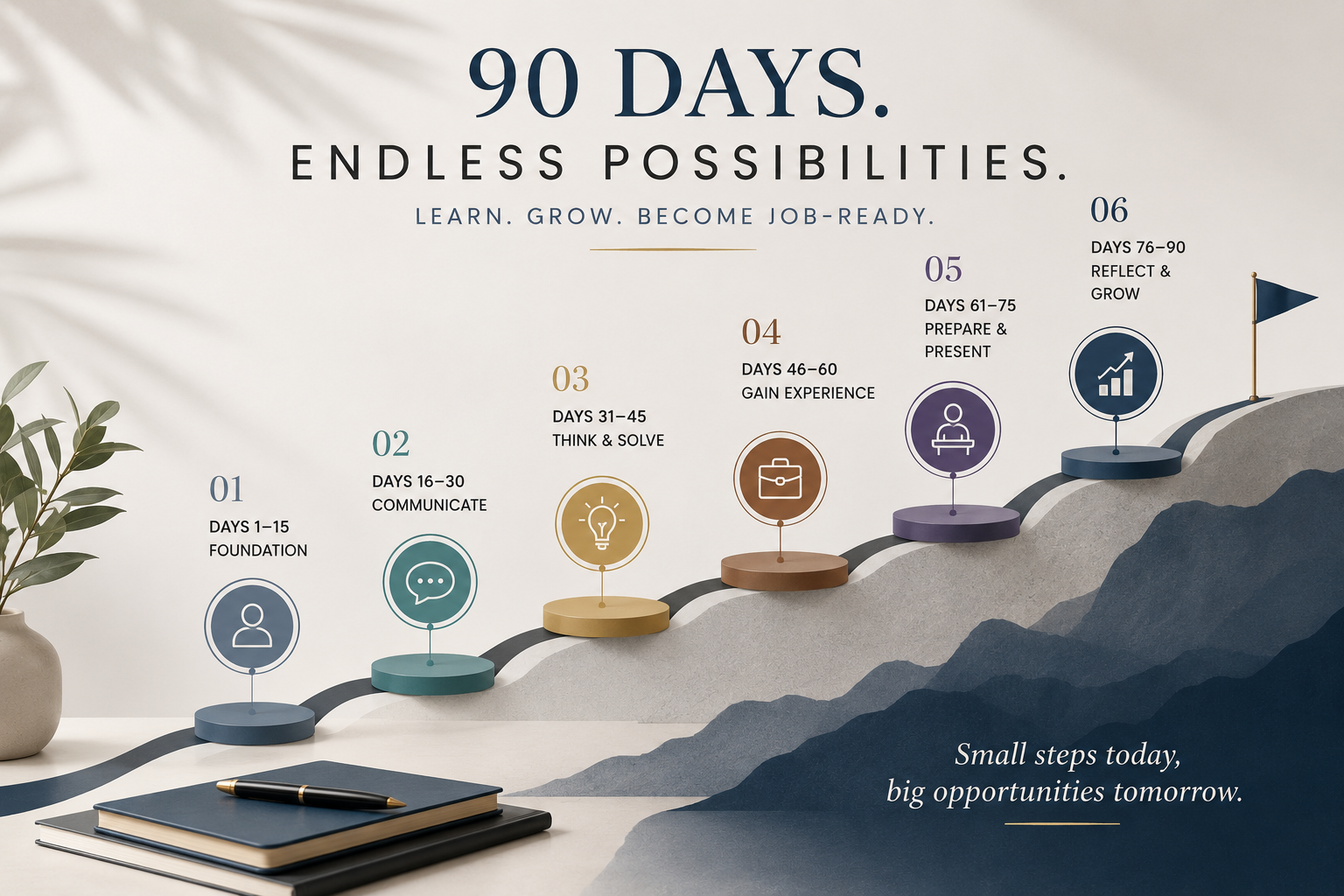
How to Become Job Ready Before You Graduate: A 90-Day Program
Most students think being job ready starts when they graduate.
But the shift is already underway.
Today’s employers want more than a good transcript. They want to know that students can communicate and think critically, that they’re adaptable and professional, and that they understand how to use what they’ve learned in the real world. These are the skills that can impact how you perform in interviews and on the job.
The good news is that you don't need years to build these capabilities. Meaningful progress can be made in 90 days—if you have a plan.
This report provides a realistic week-by-week plan to equip you with the tools to develop the skills that employers seek before you graduate, allowing you to pursue your career with greater confidence and clearer focus.
What Does Being Job Ready Look Like?
Before you start planning, you need to know what "job-ready" actually looks like.
Being job-ready doesn't mean knowing everything. It's about having the right tools in your toolbox. It includes the skills, mindset, and professional conduct needed to succeed from your very first day in the workplace.
Employers typically look beyond academic results. They want graduates who can clearly communicate their ideas, think critically, work collaboratively, adapt to new environments, and take responsibility for their own learning.
Job readiness is a combination of technical knowledge and workplace skills. While education helps you build subject knowledge, professional skills enable you to apply that knowledge effectively in real-world situations.
The goal of this 90-day plan is not to become an expert overnight. Instead, it focuses on building consistent habits that strengthen your confidence, improve your employability, and prepare you for interviews and the workplace.
The 90-Day Roadmap
Becoming job-ready is not something that happens in a day. It is formed by those little repeated acts of discipline that compound to make you increasingly more skilled both technically and professionally.
This 90-day plan is organized into six stages, each concentrating on a different area of your growth. Instead of attempting to upgrade all your skills at once, you'll focus on one skill at a time while continuing to practice the ones you've already developed.
The plan incorporates self-analysis, communication, research, hands-on experience, interview preparation, and professional branding. By the end of the 90 days, you'll have gained real insight into your strengths, identified areas where you can improve, and developed habits that support long-term career growth.
Keep in mind that consistency is more important than perfection. Even setting aside a few minutes each day can make a meaningful difference over the course of three months.
Phase 1: Days 1–15 — Know Where You Stand
The first step to being job ready is knowing where you are strong and where you need to grow. Before you acquire new skills, assess what you already know.
Begin by assessing your communication skills, technical knowledge, problem-solving skills, teamwork, and confidence. Be your own advocate and ask some real questions about what you excel at and where you struggle. Self-awareness is the cornerstone of personal and professional growth.
Build or update your résumé and LinkedIn profile during this stage. Make sure your achievements, internships, projects, certifications, and extracurricular activities are visible. An easy-to-scan professional profile allows recruiters and employers to quickly identify your strengths and areas for further development.
Get feedback from professors, mentors, classmates, or internship supervisors. They can help you identify strengths and weaknesses that you might not have noticed.
Your Goals for Days 1–15
- Be honest when assessing your current skills.
- Update your résumé and LinkedIn profile.
- Identify three strengths and three areas for improvement.
- Commit to a "no-excuses" mindset for the next 75 days.
- Establish a daily learning routine that you can realistically maintain.
Phase 2: Days 16–30 — Strengthen Your Communication Skills
Effective communication is one of the most valuable skills in the workplace. Employers expect graduates to express their ideas clearly, collaborate effectively with teams, and communicate professionally in both written and verbal situations.
During this stage, focus on improving your spoken English, presentation skills, business writing, and active listening. Practice introducing yourself, answering interview questions, and explaining your thoughts in a clear and confident manner.
Read professional articles, participate in discussions, and practice speaking aloud every day. Consistent improvement over time will significantly increase your confidence.
Your Goals for Days 16–30
- Practice speaking for 15–20 minutes every day.
- Improve your email writing and professional communication.
- Read one article related to your industry daily.
- Record yourself answering common interview questions.
- Build confidence through consistent practice and constructive feedback.
Phase 5: Days 61–75 — Get Ready to Interview and Market Yourself
Now that you have strengthened your skills, it's time to learn how to present them effectively. Employers don't just evaluate what you know—they also assess how confidently and professionally you communicate your abilities.
Use this phase to prepare for interviews by practicing frequently asked questions, participating in mock interviews, and improving your body language. When answering questions, support your responses with real examples from your academic projects, internships, volunteer work, or extracurricular activities.
At the same time, strengthen your professional brand. Keep your LinkedIn profile updated, connect with professionals in your field, share your learning journey, and engage with industry-related content. A strong professional presence can open doors to valuable networking and career opportunities.
Remember, interviews aren't about having perfect answers. They're about demonstrating confidence, honesty, and a willingness to learn.
Your Goals for Days 61–75
- Practice common interview questions regularly.
- Participate in at least one mock interview.
- Improve your body language and communication skills.
- Update your LinkedIn profile with your latest achievements.
- Build meaningful professional connections within your industry.
Phase 6: Days 76–90 — Evaluate, Improve, and Stay Job-Ready
The final phase focuses on reviewing your progress and preparing for continuous growth. Job readiness isn't a destination—it's an ongoing journey of learning, adapting, and improving.
Look back at the goals you set during the first 15 days. Assess where you've made progress and identify the skills that still need improvement. Celebrate your achievements while creating a plan to continue growing beyond the 90-day roadmap.
Seek constructive feedback from mentors, professors, internship supervisors, or peers. Their insights can help you better understand your strengths and highlight opportunities for further development.
Most importantly, continue learning. Stay updated with industry trends, attend workshops, earn relevant certifications, and remain open to new experiences. Developing a habit of continuous learning is one of the strongest foundations for long-term career success.
Your Goals for Days 76–90
- Review the goals you set at the beginning of the plan.
- Measure your progress and identify remaining skill gaps.
- Seek constructive feedback from mentors or professionals.
- Continue building your portfolio and professional network.
- Create a long-term learning plan beyond the 90-day roadmap.
Conclusion: Job Readiness Is a Journey, Not a Destination
Earning a degree is an important milestone, but becoming job-ready requires continuous learning, self-improvement, and practical experience. Today's employers look beyond academic qualifications—they value strong communication, adaptability, critical thinking, teamwork, professionalism, and the ability to apply knowledge in real-world situations.
This 90-day roadmap is designed to help you build these skills one step at a time. By staying consistent, seeking feedback, and embracing new learning opportunities, you can enter the workforce with greater confidence and a stronger foundation for long-term career success.
Remember, job readiness is not about being perfect or having all the answers. It's about developing the mindset to keep learning, adapting, and growing throughout your career.
If you're looking for a structured way to understand your current strengths and identify areas for improvement, independent assessments like GII QUEST™ can provide valuable insights into your workplace readiness and help you plan your next career steps with greater confidence.
Key Takeaways
- Job readiness is built through consistent effort, not overnight success.
- Professional skills are just as important as academic knowledge.
- Practical experience helps build confidence and workplace competence.
- Continuous learning and regular feedback support long-term career growth.
- Understanding your strengths and areas for improvement helps you prepare more effectively for future opportunities.
Take the assessment
Get your own verified Job-Readiness report
Independent, live-expert evaluation. Verified profile recruiters can find.
Register now →