What Pune & Mumbai employers want from freshers
What gets you hired isn't always what gets you shortlisted.
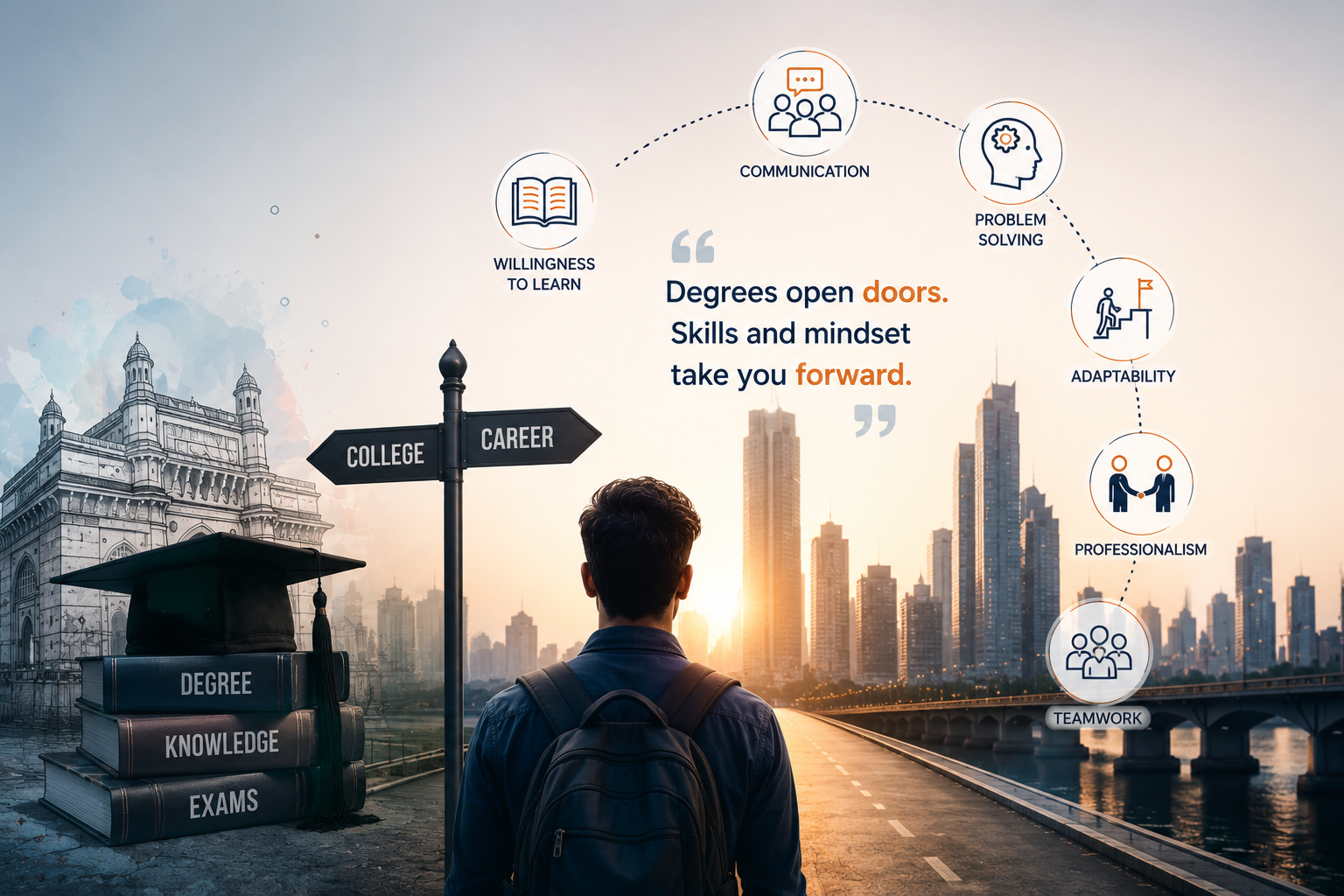
What Pune & Mumbai Employers Want from Freshers: Insights from Employer Conversations
The Rules of Graduate Hiring Have Changed
For many students, earning a degree is seen as the final milestone before beginning a career. Years are spent preparing for examinations, completing projects, and maintaining strong academic performance, with the expectation that these achievements will naturally lead to employment.
Today's hiring landscape tells a different story.
Across Pune and Mumbai—two of India's largest education and employment hubs—employers are looking beyond academic qualifications when evaluating fresh graduates. While technical knowledge and educational credentials remain important, they are increasingly viewed as the foundation rather than the deciding factor.
Recruiters want graduates who can communicate confidently, think critically, solve problems, adapt to changing environments, and demonstrate professionalism from their very first interaction.
This shift reflects the changing demands of modern workplaces. Organisations are looking for individuals who can contribute from day one, collaborate effectively with teams, and continue learning as industries evolve. As a result, employability is no longer defined only by what a candidate knows, but also by how effectively they apply that knowledge in real-world situations.
What We Learned from Employer Conversations
To better understand what organisations expect from entry-level talent, we identified recurring themes from conversations with employers and recruiters across Pune and Mumbai.
Although industries and job roles varied, the feedback was remarkably consistent. Employers repeatedly emphasised that academic performance alone rarely determines hiring decisions. Instead, they value a combination of professional skills, communication ability, a willingness to learn, and overall workplace readiness.
Several recruiters shared that many graduates possess the required technical knowledge but struggle to explain their ideas, approach practical situations, or demonstrate confidence during interviews. Others highlighted qualities such as accountability, curiosity, adaptability, and a positive learning mindset as the characteristics that often distinguish one candidate from another.
These conversations reinforce an important reality: employers are not necessarily looking for candidates who know everything. They are looking for individuals who are willing to learn, contribute meaningfully, and grow within an organisation.
Why This Matters for Every Student
Understanding employer expectations has never been more important for students preparing to enter the workforce.
The transition from college to career is becoming increasingly competitive, particularly in cities like Pune and Mumbai, where thousands of graduates enter the job market each year. Knowing what employers genuinely value enables students to prepare not only for interviews but also for long-term professional success.
In this article, we explore the qualities employers consistently look for in fresh graduates, why these skills matter in today's workplace, and how students can begin developing them well before graduation.
What Employers Really Want from Freshers
While every organisation has its own hiring approach, one message came through consistently during employer conversations: technical knowledge may help candidates get shortlisted, but professional skills often determine who gets hired.
Here are the qualities employers in Pune and Mumbai repeatedly highlighted while discussing entry-level recruitment.
Communication That Creates Clarity
Communication was one of the most frequently mentioned qualities.
Employers are not looking for candidates who speak perfect English or use complex vocabulary. Instead, they value graduates who can express their ideas clearly, ask thoughtful questions, and communicate with confidence.
Whether you're explaining a college project, participating in a team discussion, or responding during an interview, clear communication helps recruiters understand how you think and whether you can collaborate effectively in the workplace.
For many employers, communication reflects confidence, preparation, and professionalism.
A Willingness to Learn
Recruiters understand that fresh graduates are only beginning their professional journey.
They don't expect candidates to know everything. What stands out instead is a willingness to learn, accept feedback, and continuously improve.
Candidates who demonstrate curiosity, ask meaningful questions, and show genuine enthusiasm for learning are often viewed as individuals who can grow with the organisation.
In today's rapidly changing workplace, adaptability and continuous learning have become some of the most valuable professional qualities.
Problem-Solving Matters More Than Perfect Answers
Many employers shared that interview questions don't always have one "correct" answer.
Instead, they want to understand how candidates approach unfamiliar situations.
- Can they analyse a problem?
- Can they think logically?
- Can they explain the reasoning behind their decisions?
Employers appreciate candidates who remain calm, organise their thoughts, and work through challenges step by step instead of rushing to provide an answer.
In many cases, the thought process is just as important as the final answer.
Professionalism Starts Before Day One
Professional behaviour begins long before an employee joins an organisation.
Simple actions such as arriving on time, researching the company, dressing appropriately, communicating respectfully, and maintaining a positive attitude all contribute to the impression candidates leave during the hiring process.
Employers often view these behaviours as indicators of how candidates are likely to perform once they become part of the organisation.
Professionalism isn't demonstrated through one action—it's reflected through consistency.
The Ability to Work With Others
Modern workplaces thrive on collaboration.
Even technical roles require employees to work across teams, share ideas, solve problems together, and contribute towards common goals.
Recruiters consistently mentioned that graduates who demonstrate teamwork, respect different perspectives, and contribute positively during discussions are often better prepared for workplace success.
Being a strong team member is no longer an additional skill—it's an essential part of employability.
What This Means for Students in Pune & Mumbai
Understanding what employers value is the first step towards becoming more employable.
The encouraging news is that most of the qualities employers look for are not fixed personality traits—they are skills that can be developed through consistent practice and real-world experience.
Students don't need to wait until their final semester to begin preparing. Strengthening communication skills, participating in internships, working on live projects, collaborating in group activities, seeking constructive feedback, and developing a habit of continuous learning can all contribute to greater workplace readiness.
Preparation is no longer just about earning qualifications. It is about building the confidence, adaptability, and professional mindset needed to apply those qualifications effectively.
Bridging the Gap Between Education and Employment
One of the biggest challenges graduates face today is the gap between academic achievement and workplace expectations.
Educational institutions play a vital role in developing technical knowledge, but employers are increasingly looking for graduates who can apply that knowledge in practical situations, collaborate with teams, communicate effectively, and adapt to changing business environments.
Bridging this gap requires continuous learning, practical exposure, and opportunities for students to understand their strengths while identifying areas for improvement before entering the workforce.
When students become aware of these expectations early, they are better prepared to transition confidently from the classroom to the workplace.
Conclusion
The hiring landscape in Pune and Mumbai continues to evolve, but one message from employers remains consistent: technical knowledge alone is no longer enough.
Recruiters are looking for graduates who can communicate effectively, think critically, demonstrate professionalism, collaborate with others, and show a genuine willingness to learn. In many hiring decisions, these qualities are just as influential as academic achievements.
For students, this should be viewed as an opportunity rather than a challenge. By focusing on workplace readiness alongside academic success, they can build stronger professional foundations and improve their long-term career prospects.
Success in today's job market isn't determined by a single interview or a degree alone. It is built through continuous learning, practical experience, and the ability to demonstrate skills that create value in the workplace.
For students who want a structured way to understand their workplace readiness, independent assessments such as GII QUEST™ can provide valuable insights into their strengths, highlight areas for improvement, and support continuous professional development before they begin their careers.
Key Takeaways
- Employers value workplace readiness alongside academic qualifications.
- Strong communication, adaptability, professionalism, and problem-solving skills consistently influence hiring decisions.
- Practical experience and a willingness to learn help fresh graduates stand out during recruitment.
- Preparing for employment should begin well before graduation.
- Continuous self-improvement is one of the strongest indicators of long-term career success.
Take the assessment
Get your own verified Job-Readiness report
Independent, live-expert evaluation. Verified profile recruiters can find.
Register now →